
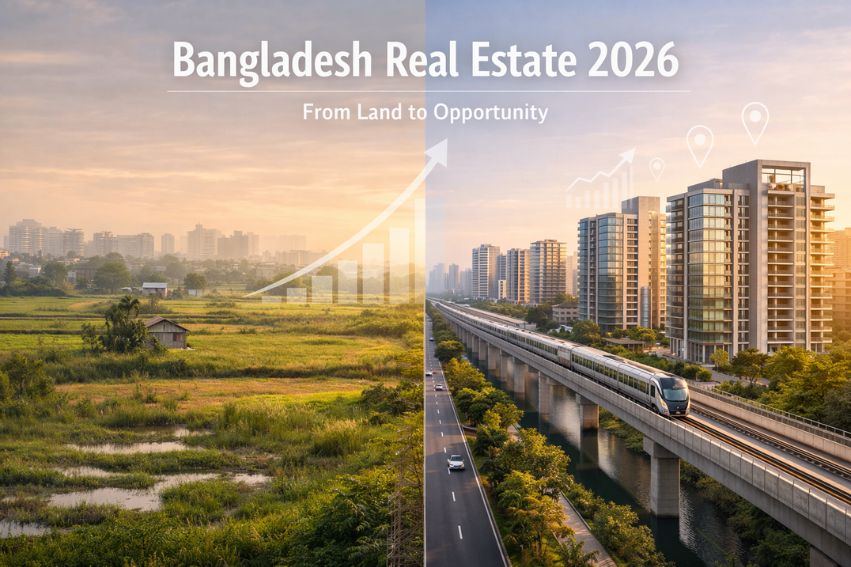
Bangladesh’s real estate market in 2026 is not just evolving — it is redefining itself under pressure and opportunity at the same time.
Driven by rapid urbanization, population growth, and infrastructure expansion, the sector continues to hold strong long-term potential. However, rising construction costs, economic adjustments, and changing buyer behavior are reshaping how the market operates.
In 2026, the focus is no longer only on expansion — it is on sustainability, affordability, and smarter development.
A Market Shaped by Urban Pressure
Cities like Dhaka remain at the center of real estate activity. With limited land and increasing population density, vertical living is becoming the norm.
At the same time, areas like Chattogram and Sylhet are emerging as strong secondary markets, attracting both local and expatriate investors.
Key urban trends include:
- Increasing demand for apartments over land
- Expansion of gated communities
- Rising interest in suburban living
The pressure on major cities is pushing development outward — creating new real estate corridors.
Property Prices in 2026
Unlike highly volatile global markets, Bangladesh is seeing a steady but uneven price movement.
Current Price Dynamics
- Prime areas in Dhaka continue to command high prices
- Mid-range housing demand is growing rapidly
- Affordable housing remains limited but in high demand
Construction costs have increased due to:
- Higher material prices
- Currency fluctuations
- Increased labor costs
As a result, developers are becoming more cautious, and buyers are becoming more selective.
Buyer Behavior Is Changing
The modern Bangladeshi buyer in 2026 is very different from a decade ago.
Today’s buyers focus on:
- Location and connectivity
- Developer reputation
- Legal clarity and documentation
- Long-term value rather than short-term gain
There is also a noticeable shift toward:
- Ready apartments instead of under-construction projects
- Smaller, more efficient living spaces
This signals a maturing market mindset.
Infrastructure Is Driving Growth
One of the biggest forces behind real estate growth in Bangladesh is infrastructure development.
Major projects like metro rail, expressways, and economic zones are transforming how people choose property locations.
Areas connected to new infrastructure are seeing:
- Increased land value
- Rising housing demand
- New investment opportunities
This is creating a location-driven market, where connectivity defines value.
Investment Landscape in 2026
Real estate remains one of the most trusted investment sectors in Bangladesh.
Where Investors Are Looking
- Residential apartments in developing areas
- Land near infrastructure projects
- Rental properties in urban zones
Rental demand remains strong, especially in Dhaka, driven by:
- Migration from rural areas
- Growing middle-class population
- Limited housing supply
Investors are increasingly focusing on steady rental income rather than speculative gains.
Challenges Facing the Market
Despite strong fundamentals, several challenges persist:
- High property prices in prime areas
- Limited affordable housing supply
- Rising construction costs
- Financing constraints for buyers
- Regulatory and approval delays
These challenges are slowing rapid expansion but also pushing the market toward more structured growth.
The Shift Toward Planned Living
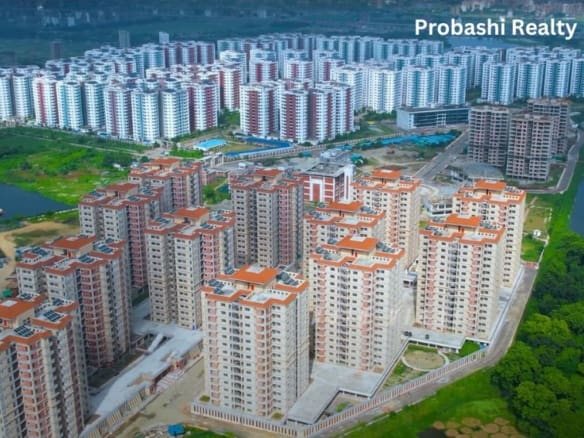
A noticeable trend in 2026 is the growing demand for planned residential communities.
Buyers now prefer:
- Secure, gated environments
- Access to schools, hospitals, and shopping
- Better infrastructure and utilities
This shift is encouraging developers to move beyond standalone buildings and focus on community-based developments.
Future Outlook
Looking ahead, Bangladesh’s real estate market is expected to:
- Grow steadily with urban expansion
- Benefit from infrastructure development
- See increased demand for affordable housing
- Attract more organized and professional developers
The market may not grow explosively, but it is becoming more stable, transparent, and opportunity-driven.
Conclusion
The Bangladesh real estate market in 2026 is a story of adaptation and resilience.
It is moving away from informal growth toward a more structured and strategic future. For buyers and investors, this means better clarity, smarter opportunities, and long-term value.
In a market shaped by both pressure and progress, those who understand the trends will be best positioned to succeed.
Join The Discussion