
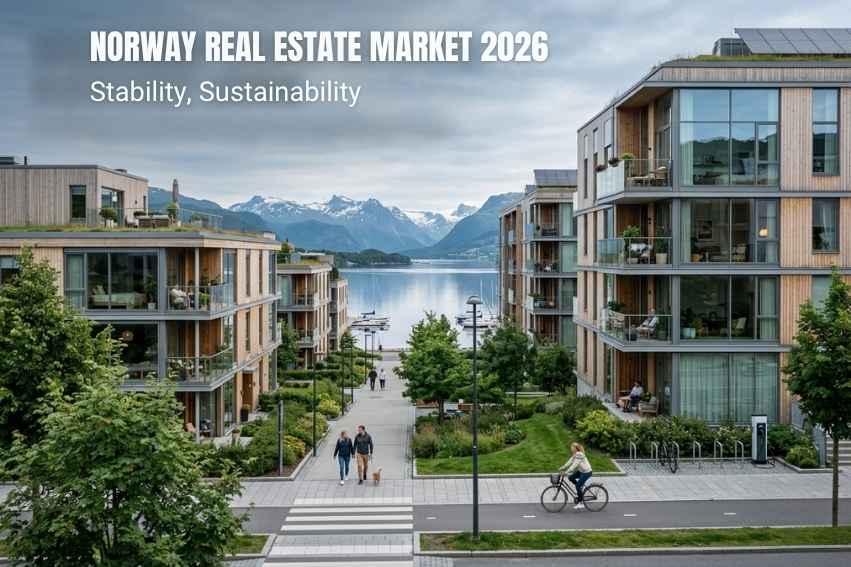
As Norway enters 2026, its real estate market continues to reflect one of the most stable and well-regulated property environments in Europe. Unlike high-volatility markets, Norway is defined by steady growth, strict regulations, and strong economic fundamentals.
The market is not driven by rapid speculation but by long-term planning, high living standards, and sustainable development priorities. With strong purchasing power and a highly organized financial system, Norway remains a benchmark for stability in global real estate.
In this article, we explore the key trends shaping Norway’s property market, from pricing dynamics to investment opportunities and future outlook.
Market Overview: Stability Rooted in Economic Strength
The Norwegian real estate market in 2026 is characterized by controlled growth and cautious optimism.
Key characteristics include:
- Stable but modest property price growth
- Strong influence of interest rates on buyer activity
- High homeownership rates supported by solid income levels
- Strict lending and regulatory frameworks
- Limited but consistent housing supply
Unlike many global markets, Norway avoids extreme fluctuations due to its well-regulated banking system and conservative lending practices. This creates a market that is predictable, secure, and resilient.
At the same time, population growth in urban areas like Oslo is steadily increasing demand for housing, particularly in central and well-connected locations.
Property Prices in 2026
Property prices in Norway remain high by global standards, but growth is now more controlled compared to previous years.
Key Price Insights
- Moderate price growth across major cities
- Strong price stability in high-demand areas
- Slight corrections in some overheated segments
- High entry cost for first-time buyers
Property Type Trends
- Apartments: High demand in urban centers like Oslo and Bergen
- Detached houses: Popular in suburban and rural areas
- Luxury properties: Stable demand among high-income buyers
Norway’s property prices are heavily influenced by interest rates and mortgage regulations, making affordability a central concern.
Regional Market Insights
Norway’s real estate market varies significantly between urban and regional areas.
Major Urban Markets
- Oslo remains the most expensive and active market
- Strong demand for apartments and rental properties
- Limited housing supply driving competition
Regional & Lifestyle Markets
- Bergen, Stavanger, and Trondheim offer more balanced pricing
- Rural and coastal areas attract lifestyle buyers
- Growing interest in secondary homes and cabins (hytter)
The Norwegian lifestyle strongly influences property demand, with many buyers prioritizing quality of life, nature access, and sustainability.
Supply and Demand Dynamics
Norway continues to face a structural imbalance between supply and demand in key urban areas.
Supply Trends
- Limited new housing construction due to regulations and land constraints
- Strict zoning and environmental policies
- Slow but steady development in urban expansion zones
Demand Trends
- Strong demand from young professionals in cities
- Increasing need for rental housing
- Preference for energy-efficient and modern homes
The housing shortage in major cities continues to support long-term property value stability.
Interest Rates and Buyer Behavior
Interest rates play a critical role in shaping the Norwegian property market.
Key Observations
- Higher interest rates have reduced buying activity in recent years
- Buyers are more cautious and financially disciplined
- Mortgage approvals remain strict under national banking guidelines
Norway’s central bank policies directly influence affordability, making financial planning essential for buyers.
Investment Opportunities in 2026
Norway offers a low-risk, long-term investment environment, although returns are generally moderate compared to high-growth markets.
Top Investment Segments
- Residential apartments in Oslo
- Rental properties in urban areas
- Student housing near universities
- Sustainable and energy-efficient developments
Why Investors Are Interested
- Strong economic stability
- Transparent legal system
- High rental demand in cities
- Low risk of market volatility
Investors in Norway typically prioritize capital preservation and steady rental income rather than rapid appreciation.
Rental Market Outlook
The rental market in Norway remains strong, especially in urban centers.
Key Trends
- High demand for rental housing in Oslo
- Increasing rental prices due to limited supply
- Growth in student and young professional rentals
- Long-term tenancy preference over short-term rentals
Rental yields are stable but relatively moderate, reflecting the country’s balanced economic structure.
Sustainability & Green Housing Trends
One of the defining features of Norway’s real estate market in 2026 is its strong focus on sustainability.
Key Developments
- Energy-efficient buildings are becoming the standard
- Government incentives for green housing
- Increased demand for eco-friendly and low-energy homes
- Integration of smart home technologies
Norway’s commitment to environmental sustainability plays a major role in shaping construction standards and buyer preferences.
Challenges in the Market
Despite its stability, several challenges exist:
- High property prices limiting affordability
- Strict mortgage and lending requirements
- Limited housing supply in urban areas
- Economic sensitivity to global interest rate changes
These factors contribute to a cautious but balanced market environment.
Future Outlook
Looking ahead, Norway’s real estate market is expected to:
- Maintain stable and moderate price growth
- Continue facing supply constraints in major cities
- Strengthen focus on sustainability and energy efficiency
- Attract long-term, low-risk investors
The market will remain driven by economic stability, strong regulation, and lifestyle quality rather than speculation.
Conclusion
The Norway real estate market in 2026 is defined by stability, discipline, and sustainability.
For buyers, it offers a secure and transparent system with long-term value.
For investors, it provides a reliable, low-risk environment with consistent demand.
Overall, 2026 represents a year of controlled growth and strategic investment in one of the world’s most stable and well-regulated property markets.

Join The Discussion