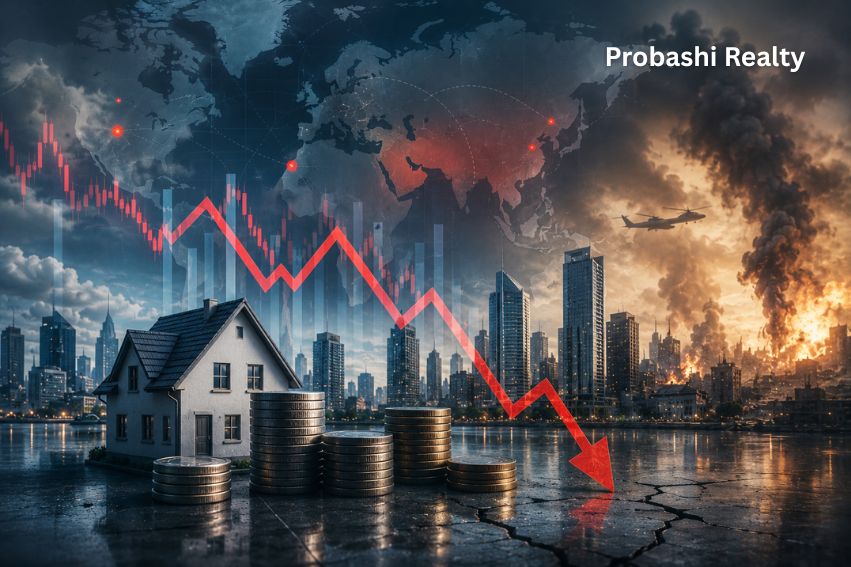
Geopolitical conflicts influence property prices, rents, construction costs, interest rates and investor confidence. Wars, sanctions, energy shocks, migration and trade disputes can weaken some markets while directing capital toward stable locations.
In 2026, conflicts involving Ukraine, Iran and the Middle East, along with shipping disruptions and changing financial conditions, are affecting real estate worldwide. However, prices do not fall everywhere. Some markets lose demand, while others benefit from safe-haven investment.
1. Investor Confidence Falls First
Political uncertainty often causes investors to delay:
-
Property purchases
-
Developments
-
Commercial projects
-
Cross-border investments
-
Financing decisions
Transaction volumes may decline before prices do. Long-term investors may still buy if they see attractive valuations.
2. Interest Rates and Inflation Rise
Conflicts can disrupt energy, food, shipping and supply chains, increasing inflation. Central banks may then keep interest rates higher.
Higher rates → Higher mortgage costs → Lower borrowing capacity → Fewer buyers
This can reduce property transactions and valuations, especially in highly leveraged commercial markets.
3. Construction Costs Increase
Higher prices for steel, cement, fuel, machinery and shipping can cause:
-
Project delays
-
Higher property prices
-
Lower developer profits
-
Reduced housing supply
-
Higher rents
4. Shipping Disruptions Affect Real Estate
Disruptions around major routes such as the Strait of Hormuz can raise energy and delivery costs. This affects construction, property prices, rental supply and investment returns.
5. Safe-Haven Cities May Attract Capital
Investors often prefer markets with:
-
Political stability
-
Strong legal systems
-
Reliable infrastructure
-
Currency stability
-
Economic diversity
-
Security
Cities such as London, Singapore, New York, Toronto, Tokyo and Sydney may benefit, although taxes, interest rates and local policies still matter.
6. Dubai Shows Localized Risk
Dubai remains a major business and investment hub, but regional tensions can affect tourism, aviation, trade and investor confidence. Gulf markets have responded differently, showing that risk must be assessed by city, sector and asset type.
7. Europe Faces Energy and Rate Pressures
Europe is sensitive to geopolitical shocks because of its energy dependence and proximity to Ukraine. Higher inflation and interest rates can reduce property affordability and commercial valuations.
Residential and commercial markets may respond differently.
8. Conflict Creates Uneven National Markets
Ukraine shows how property values can vary greatly within one country. Location, security, infrastructure, transport, employment and population movement all affect prices.
National statistics may hide major differences between cities.
9. Migration Raises Rental Demand
War and instability can increase demand for:
-
Rental housing
-
Affordable homes
-
Student accommodation
-
Hotels
-
Temporary housing
This may benefit landlords but make housing less affordable for local residents.
10. Residential Property May Be More Resilient
Higher mortgage costs can keep people renting longer, supporting demand for apartments, multifamily housing, student accommodation and build-to-rent projects.
11. Commercial Property Faces Extra Risks
-
Offices: Businesses may delay expansion.
-
Retail: Higher costs can reduce spending.
-
Hotels: Tourism and business travel may decline.
-
Industrial: Supply-chain changes create both risks and opportunities.
-
Logistics: Demand may rise as companies relocate warehouses.
12. Supply-Chain Changes Create Opportunities
Nearshoring, regional manufacturing and multiple suppliers can increase demand for:
-
Warehouses
-
Distribution centers
-
Industrial parks
-
Data infrastructure
13. Data Centers Become Strategic Assets
AI and digital growth are increasing demand for data centers. Important factors include reliable power, security, telecommunications, water and political stability.
14. Currency Risk Affects Foreign Investors
Currency movements can increase or reduce returns. Investors must consider both property performance and exchange-rate changes.
15. Insurance Costs May Rise
High-risk regions may face higher premiums, deductibles, exclusions and limited coverage. Insurance should be included in investment calculations.
16. Regulations May Change
Governments may introduce:
-
Foreign ownership limits
-
Additional taxes
-
Capital controls
-
Sanctions
-
Anti-money-laundering rules
-
Restrictions on strategic land
Investors should monitor policy changes closely.
17. Not Every Market Will Decline
Geopolitical conflict does not automatically cause a global property crash. Outcomes depend on location, interest rates, economic strength, housing supply, population growth, government policy and property type.
Global Property Impacts
| Factor | Possible Impact |
|---|---|
| Political instability | Lower confidence |
| Higher oil prices | Higher inflation and construction costs |
| Higher interest rates | More expensive borrowing |
| Currency volatility | Greater investment risk |
| Migration | Higher rental demand |
| Supply-chain changes | More logistics demand |
| Housing shortages | Higher prices and rents |
| Safe-haven demand | More capital inflows |
| Tourism disruption | Pressure on hotels |
| Infrastructure investment | Long-term growth |
| Data-center expansion | Demand for specialized property |
What Should Investors Do in 2026?
-
Diversify geographically.
-
Choose markets with strong fundamentals.
-
Avoid excessive debt.
-
Analyze genuine rental demand.
-
Consider essential assets such as housing, logistics and healthcare.
-
Monitor regulations and taxes.
-
Think long term.
A New Investment Approach
Investors should consider more than:
Price + Rental Yield + Location
They should also assess:
Political Stability + Energy Security + Infrastructure + Currency Risk + Financing Costs