
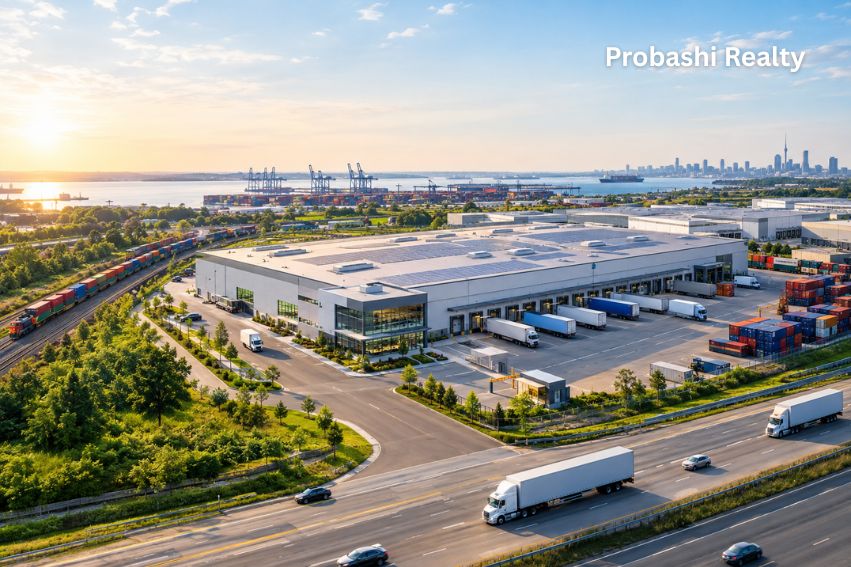
Real estate investment has traditionally focused on residential properties, offices, retail spaces, and land. However, logistics real estate has become an increasingly attractive option for investors around the world.
Warehouses, distribution centers, fulfillment facilities, and last-mile delivery properties are becoming essential to the modern economy. The growth of e-commerce, faster delivery expectations, and changing global supply chains are all increasing demand for well-located logistics properties.
But why are investors paying more attention to this sector?
What Is Logistics Real Estate?
Logistics real estate includes properties used to store, manage, and distribute goods. This can include:
- Warehouses and distribution centers
- Fulfillment centers
- Last-mile delivery facilities
- Cold-storage buildings
- Industrial and manufacturing properties
Location is particularly important. Properties near highways, airports, ports, railway networks, and major cities can be highly valuable because they help businesses move products efficiently.
E-Commerce Is Driving Demand
The rapid growth of online shopping is one of the biggest factors behind the demand for logistics properties.
Consumers now expect products to arrive quickly and reliably. Behind every online order is a physical supply chain involving storage, packaging, sorting, and transportation.
As e-commerce continues to evolve, retailers and logistics companies need more strategically located facilities to serve customers.
This makes warehouses an increasingly important part of modern commercial real estate.
Same-Day Delivery Is Changing Property Locations
Faster delivery has also increased demand for last-mile logistics facilities.
Large distribution centers are often located outside major cities where land is more affordable. However, smaller facilities closer to urban populations allow companies to deliver products faster.
As cities become more densely populated, well-located industrial properties near major consumer markets can become particularly attractive to investors.
Supply Chains Are Becoming More Important
Global supply-chain disruptions have encouraged many companies to rethink how they store and distribute products.
Businesses are increasingly looking for:
- Regional distribution networks
- Additional inventory capacity
- Multiple supply routes
- Facilities closer to major markets
- More flexible logistics operations
These changes can create additional demand for warehouses and distribution centers.
For investors, this means logistics real estate is becoming connected to a much broader economic trend: the modernization and diversification of global supply chains.
Location Can Make a Major Difference
In logistics real estate, location directly affects business efficiency.
A property near a major highway can reduce transportation times. A facility close to an airport or seaport can support international trade. A warehouse near a large population center can make last-mile delivery easier.
Investors therefore look closely at:
- Highway and road access
- Ports and airports
- Rail connections
- Population growth
- Industrial activity
- Nearby commercial markets
A well-located property can remain attractive to tenants even as market conditions change.
Potential for Stable Rental Income
Logistics properties can also appeal to investors looking for recurring rental income.
Businesses often prefer to stay in facilities that are strategically important to their operations. Relocating a warehouse can involve significant costs, planning, and disruption.
As a result, some logistics properties can attract longer-term leases, potentially providing investors with greater income visibility.
However, investors should always examine the tenant’s financial strength, lease terms, rental rates, and local market conditions before purchasing a property.
Technology Is Transforming Warehouses
Today’s logistics facilities are becoming increasingly sophisticated.
Automation, robotics, artificial intelligence, and advanced inventory systems are changing how warehouses operate. Modern facilities may require greater power capacity, higher ceilings, advanced loading areas, and flexible layouts.
This means investors should consider not only the current condition of a property but also whether it can meet the future needs of logistics businesses.
Cold Storage Is Another Growing Opportunity
Cold-storage facilities are another important part of logistics real estate.
These specialized properties are used for products such as food, pharmaceuticals, and other temperature-sensitive goods.
Because they require specialized equipment and infrastructure, cold-storage properties can be more complex to develop and operate. However, growing demand for food delivery, healthcare products, and pharmaceutical distribution is increasing interest in this segment.
Logistics Real Estate Can Diversify a Portfolio
Investors often use different property types to diversify their real estate portfolios.
A portfolio may include residential properties, retail spaces, offices, land, and industrial assets.
Adding logistics real estate can provide exposure to the growing demand for transportation, e-commerce, manufacturing, and distribution.
Diversification does not eliminate risk, but it can reduce reliance on a single type of property or market.
What Should Investors Look For?
Not every warehouse or industrial property is automatically a good investment.
Before purchasing, investors should consider:
Location: Is the property close to major transportation routes and population centers?
Tenant: Is the tenant financially stable and likely to remain in the property?
Lease: How long is the lease, and are there provisions for rental increases?
Building Quality: Can the property support modern logistics operations?
Market Demand: Is there strong demand for industrial space in the area?
Future Development: Could new facilities create additional competition?
Infrastructure: Are roads, utilities, power, and transportation connections adequate?
These factors can have a significant impact on the property’s long-term performance.
The Future of Logistics Real Estate
The logistics sector is evolving alongside the global economy.
E-commerce, faster delivery, automation, supply-chain modernization, and regional manufacturing are all creating new requirements for industrial properties.
As a result, logistics real estate is becoming more than simply warehouse space. It is an important part of the infrastructure that keeps businesses and consumers connected.
For investors, properties with strong locations, reliable tenants, modern infrastructure, and long-term adaptability may offer particularly interesting opportunities.



Join The Discussion